
ge profile washer dryer combo manual
GE Profile Washer Dryer Combo Manual: An Overview
This comprehensive guide illuminates the operation of your GE Profile appliance, offering detailed instructions for optimal performance and longevity.
It’s designed to assist users in understanding all features, ensuring efficient laundry care, and troubleshooting potential issues with ease.
Understanding Your Appliance
Your GE Profile Washer Dryer Combo represents a significant advancement in laundry technology, integrating washing and drying capabilities into a single, space-saving unit. This appliance is engineered for convenience, offering a range of cycles and features designed to handle diverse fabric types and laundry needs.
It’s crucial to recognize that this combo unit operates differently than traditional separate washer and dryer machines. Understanding its unique functionalities – such as ventless drying technology and automatic cycle transitions – is key to maximizing its performance. Familiarize yourself with the control panel, cycle options, and maintenance requirements outlined in this manual to ensure efficient and effective operation.
Proper usage will extend the lifespan of your appliance and deliver consistently clean and dry results.
Model Number Identification
Locating your GE Profile Washer Dryer Combo’s model number is essential for accessing specific support resources, ordering replacement parts, and registering your appliance for warranty coverage. The model number is typically found on a label affixed to the appliance itself.
Common locations include inside the washer/dryer door jamb, on the back panel, or beneath the control panel. This alphanumeric code uniquely identifies your specific model and its features.
When contacting GE customer service or searching for information online, having the model number readily available will expedite the process and ensure you receive accurate assistance. Note the serial number as well, as it’s often required for warranty claims and service appointments. Keep this information in a safe place for future reference.
Safety Precautions
Prioritizing safety is paramount when operating your GE Profile Washer Dryer Combo. Always ensure the appliance is properly grounded to prevent electrical shock. Never operate the machine if the power cord is damaged or if the appliance shows signs of malfunction.
Keep children and pets away from the appliance during operation. Do not attempt to repair the unit yourself; contact a qualified technician for service.
Avoid washing or drying items that have been soaked in flammable liquids. Regularly inspect the exhaust vent for obstructions to prevent fire hazards. Disconnect the appliance from the power supply before cleaning or performing maintenance. Follow all warning labels and instructions provided in this manual to ensure safe and reliable operation.
Installation Guide

Proper installation is crucial for optimal performance. This section details unpacking, location selection, water and electrical connections, ensuring a secure and efficient setup.
Unpacking and Inspection
Carefully unpack your GE Profile Washer Dryer Combo, retaining all packaging materials until you’ve confirmed complete functionality. Inspect the appliance thoroughly for any shipping damage – dents, scratches, or broken parts. Document any damage immediately with photographs and contact your retailer or GE customer support.
Remove all protective films and shipping restraints, including those securing the drum. Verify that all included accessories are present: inlet hoses, drain hose, leveling feet, and this user manual. Ensure the appliance is stable and level before proceeding. Failure to remove shipping materials can cause significant damage during operation. A detailed inspection now prevents potential issues later, guaranteeing a smooth start with your new laundry solution.
Location Requirements
Proper placement is crucial for optimal performance. Select a level, stable floor capable of supporting the washer dryer combo’s weight, especially when fully loaded with laundry and water. Ensure adequate ventilation around the appliance – at least 4 inches of clearance on all sides and the rear.
Avoid direct sunlight and extreme temperatures. The location must be near both a grounded electrical outlet and water supply connections. Do not install in damp or humid areas. Verify the floor can withstand potential vibrations during operation. Confirm sufficient space for accessing the detergent dispenser, control panel, and for loading/unloading laundry. Ignoring these requirements may void your warranty and compromise performance.
Connecting Water Supply
Carefully connect the hot and cold water supply hoses to the designated inlets on the back of the appliance. Ensure a tight, leak-proof connection using appropriate pliers – avoid over-tightening. A water hammer arrestor is recommended to prevent banging noises in the pipes.
Before connecting, flush the water lines to remove any debris. Use new hoses; do not reuse old ones. Check for leaks immediately after connection and before operating the machine. The water pressure should be between 20 and 100 psi. Improper connection can lead to water damage, so double-check all fittings. Always shut off the water supply before disconnecting hoses for maintenance.
Electrical Connection
Ensure the voltage matches the appliance’s requirements, typically 120V, 60Hz. This unit requires a dedicated, grounded three-prong electrical outlet. Do not use extension cords or adapters. Improper grounding poses a significant electrical shock hazard.
The appliance should be installed in accordance with local electrical codes. A licensed electrician is recommended for installation. Before any electrical work, disconnect power at the breaker. Verify the outlet is properly grounded using a receptacle tester. Never attempt to repair the power cord yourself; contact qualified service personnel. Incorrect electrical connection can damage the appliance and void the warranty.
Operating Instructions
Mastering your GE Profile requires understanding the control panel, cycle selections, and detergent dispensing. This section details each step for effective laundry results.
Control Panel Explained
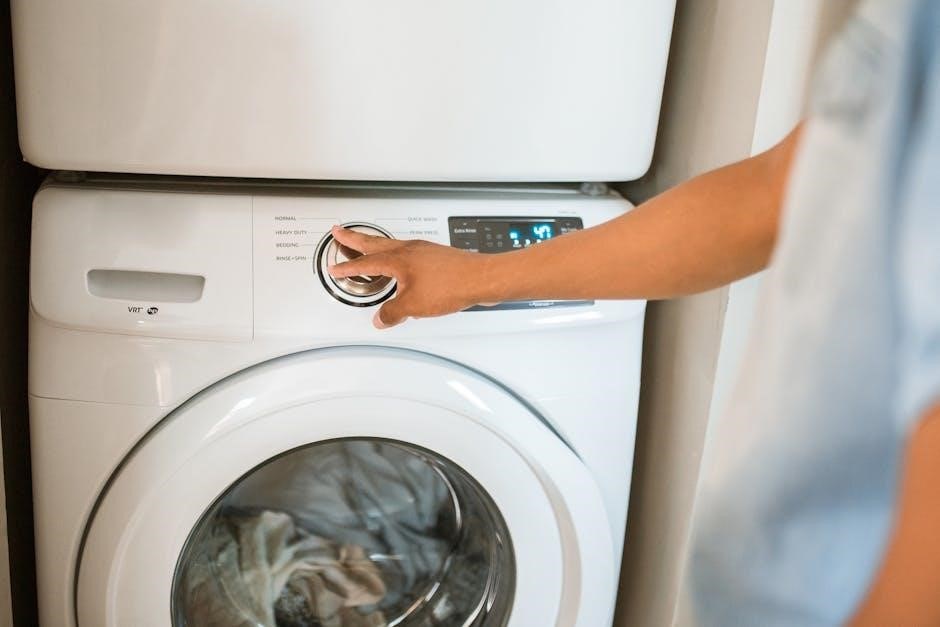
The GE Profile washer dryer combo’s control panel is designed for intuitive operation, featuring a digital display and various buttons/knobs. The power button initiates all functions, while the cycle selector allows choosing between pre-programmed wash and dry cycles – Normal, Delicate, Heavy Duty, Quick Wash, and more.
Temperature settings are adjustable for both wash and dry cycles, catering to different fabric types. Options include Hot, Warm, and Cold for washing, and High, Medium, and Low for drying. Modifier buttons like ‘Sanitize’ and ‘Steam’ enhance cleaning performance.
Delay start allows scheduling laundry, and the ‘Add Garment’ feature enables adding items mid-cycle. Error codes displayed on the screen indicate potential issues, referencing the troubleshooting section of this manual. Familiarizing yourself with these controls ensures optimal appliance usage and personalized laundry care.
Wash Cycle Selection
Selecting the appropriate wash cycle is crucial for optimal cleaning and fabric care. The GE Profile combo offers a variety of cycles tailored to different needs. ‘Normal’ is ideal for everyday laundry, while ‘Delicate’ gently cleans fragile items like lingerie and silk. ‘Heavy Duty’ tackles heavily soiled clothes, and ‘Quick Wash’ provides a fast cleaning option for lightly soiled items.
‘Bulky Items’ accommodates larger loads like comforters, and ‘Sanitize’ eliminates bacteria for enhanced hygiene. A ‘Permanent Press’ cycle minimizes wrinkles, and ‘Colors’ protects vibrant hues.
Consider fabric type, soil level, and desired cleaning intensity when choosing a cycle. Refer to garment care labels for specific instructions. Utilizing the correct cycle ensures effective cleaning, prevents damage, and prolongs the life of your clothes. Experiment to find the best settings for your laundry habits;
Dry Cycle Selection
The GE Profile combo’s dryer offers a range of cycles to suit various fabrics and drying preferences. ‘Normal’ is suitable for everyday loads, while ‘Delicate’ provides gentle heat for sensitive items. ‘Heavy Duty’ efficiently dries bulky items like towels and jeans. ‘Quick Dry’ offers a faster drying option for smaller loads or lightly damp clothes.
‘Steam Refresh’ revitalizes clothes and reduces wrinkles without washing, and ‘Sanitize’ utilizes high heat to eliminate bacteria. ‘Permanent Press’ minimizes wrinkles in synthetic fabrics. ‘Timed Dry’ allows for customized drying times, and ‘Air Fluff’ provides a no-heat refresh.
Always check garment care labels before selecting a cycle. Proper cycle selection prevents damage, reduces energy consumption, and ensures optimal drying results. Consider load size and fabric type for best performance.
Adding Detergent and Fabric Softener
Proper detergent and softener dispensing is crucial for optimal cleaning and fabric care. The GE Profile combo features designated compartments within the dispenser drawer. Use only High Efficiency (HE) detergent, as standard detergents create excessive suds and can damage the machine.
Pour the recommended amount of HE detergent into the marked compartment – follow detergent packaging guidelines based on load size and soil level. Fabric softener goes into the separate, labeled compartment; avoid overfilling. Some models offer an automatic dispenser that releases softener at the appropriate time.
Regularly clean the dispenser drawer to prevent buildup and ensure proper function. Avoid using powdered bleach directly into the drum; use the bleach dispenser if available.
Maintenance and Troubleshooting
Regular upkeep ensures peak performance and extends the life of your GE Profile combo. Addressing minor issues promptly prevents costly repairs and maintains efficiency.
Cleaning the Washer
Maintaining a clean washer is crucial for optimal performance and preventing unpleasant odors. After each wash, leave the door slightly ajar to allow for ventilation and prevent mildew growth. Regularly wipe down the drum with a damp cloth and mild detergent.
For a deeper clean, utilize the washer’s self-clean cycle (if equipped) with a washer cleaner specifically designed for HE machines. Alternatively, run an empty hot water cycle with two cups of white vinegar to dissolve mineral buildup and residue. Pay attention to the detergent dispenser; remove and rinse it thoroughly to prevent clogs.
Inspect the rubber door gasket for any trapped debris, such as lint, hair, or small objects, and remove them promptly. A clean gasket ensures a proper seal and prevents leaks. Finally, clean the exterior surfaces with a soft cloth and mild cleaning solution.
Cleaning the Dryer
Regular dryer cleaning is paramount for safety and efficiency, preventing fire hazards caused by lint accumulation. After each load, clean the lint filter thoroughly – this is the most crucial step! A clogged filter restricts airflow, increasing drying time and energy consumption.
Periodically, use a vacuum cleaner with a hose attachment to remove lint from the lint filter housing. Inspect the dryer vent hose and ensure it’s not kinked or crushed. Disconnect the vent hose and vacuum out any accumulated lint.
Wipe down the dryer drum with a damp cloth to remove any residue. Clean the exterior surfaces with a soft cloth and mild cleaning solution. Avoid using abrasive cleaners that could damage the finish. Remember, a clean dryer operates safely and efficiently!
Filter Maintenance
Maintaining clean filters is essential for optimal performance of your GE Profile washer dryer combo. The lint filter, located within the dryer compartment, requires cleaning after every load to ensure proper airflow and prevent fire hazards. Remove the lint filter and discard the accumulated lint.
Additionally, a drain pump filter exists within the washer section. This filter traps small objects and debris, preventing clogs. Consult your manual for the specific location and cleaning procedure, typically involving a small access panel.
Regularly inspect both filters for damage and replace them if necessary. A clogged or damaged filter can reduce drying efficiency, increase energy consumption, and potentially damage the appliance. Prioritize filter maintenance for a long-lasting, efficient unit!
Common Error Codes and Solutions
Your GE Profile washer dryer combo utilizes error codes to diagnose issues. A common code, “E1,” often indicates a water supply problem – check connections and ensure the water valve is open. “E2” typically signals a drain blockage; inspect the drain hose and pump filter for obstructions.
Error code “E3” may point to a temperature sensor malfunction, requiring professional service. If you encounter “LE,” it usually means an unbalanced load – redistribute the clothes inside the drum. For “OE,” an overfill situation has occurred; turn off the water supply and drain excess water.
Always consult the full error code list in your manual for precise definitions and troubleshooting steps. If a code persists after attempting solutions, contact GE’s customer support or a qualified appliance technician for assistance.
Advanced Features
Explore innovative functions like steam sanitization, Wi-Fi connectivity for remote control, and specialized cycles designed for optimal fabric care and enhanced cleaning performance.
Steam Functionality
Harness the power of steam for a deeper, more hygienic clean. GE Profile washer dryer combos featuring steam technology utilize the natural cleaning properties of steam to penetrate fabrics, effectively removing stubborn stains and allergens. This is particularly beneficial for delicate items and those requiring extra sanitation.
The steam cycle gently refreshes clothes, reducing wrinkles and minimizing the need for ironing. Several steam options may be available, including a ‘Steam Refresh’ cycle for lightly worn garments and a ‘Sanitize with Steam’ cycle for heavily soiled items. Always refer to the garment care label before selecting a steam cycle to ensure compatibility. Steam functionality contributes to a more thorough and gentle cleaning process, preserving the quality and longevity of your clothes.
Sanitize Cycle
Prioritize hygiene with the Sanitize cycle, designed to eliminate bacteria and viruses from your laundry. This cycle utilizes elevated water temperatures and extended wash times to achieve a thorough cleaning, exceeding standard wash cycles. It’s ideal for items like bedding, baby clothes, and heavily soiled garments where deep cleaning is essential.
The Sanitize cycle often incorporates a higher rinse temperature to ensure all traces of detergent and sanitizing agents are removed. Some models may combine the Sanitize cycle with steam functionality for enhanced performance. Always check garment care labels before using this cycle, as high temperatures may not be suitable for all fabrics. Utilizing the Sanitize cycle provides peace of mind, knowing your laundry is exceptionally clean and hygienic.
Wi-Fi Connectivity (if applicable)
Unlock smart laundry features with your GE Profile washer dryer combo’s Wi-Fi connectivity. Once connected to your home network, you can remotely monitor and control your appliance via the SmartHQ app. Initiate cycles, receive notifications when laundry is complete, and diagnose potential issues—all from your smartphone or tablet.
The app also provides access to customized wash cycles and downloadable programs tailored to specific fabric types and soil levels. Voice control integration with smart home assistants like Google Assistant or Amazon Alexa allows for hands-free operation. Software updates are delivered automatically, ensuring your appliance benefits from the latest features and improvements. Enjoy enhanced convenience and control over your laundry routine with seamless Wi-Fi integration.
Technical Specifications
Detailed dimensions and weight, alongside energy consumption data, are crucial for installation planning and understanding operational costs of your GE Profile combo.
Dimensions and Weight
Understanding the physical specifications of your GE Profile Washer Dryer Combo is paramount for successful installation and ensuring it fits seamlessly into your designated laundry space. Typical models range in height from approximately 38 to 39 inches, width between 27 and 30 inches, and depth spanning 30 to 33 inches.
However, precise measurements vary significantly depending on the specific model number. Always consult the detailed specifications sheet accompanying your appliance or the GE Appliances website for the exact dimensions of your unit. Weight generally falls between 250 to 300 pounds when empty, a considerable factor when planning for delivery and placement.
Properly assessing these dimensions prevents installation challenges and guarantees adequate ventilation around the unit for optimal performance and longevity. Ignoring these specifications could lead to operational inefficiencies or even void the warranty.
Energy Consumption
Understanding the energy usage of your GE Profile Washer Dryer Combo is crucial for managing household expenses and minimizing environmental impact. These appliances are typically Energy Star certified, indicating adherence to strict efficiency guidelines.
Average water consumption per wash cycle ranges from 13 to 18 gallons, while electricity usage varies based on cycle selection and load size, generally between 0.6 to 1.5 kWh per wash and 2 to 4 kWh per dry. The steam function, if equipped, will naturally increase energy consumption.
Utilizing eco-friendly cycles and avoiding excessive drying can significantly reduce energy costs. Refer to the EnergyGuide label affixed to your appliance for specific energy consumption estimates tailored to your model. Regularly cleaning lint filters also optimizes dryer efficiency, lowering energy use.